Bringing a ZX Spectrum +2's Datacorder back from the dead
My grey ZX Spectrum +2 had a really annoying fault. I'd press play, the cassette would turn for a second, and then it would just stop. Nothing dramatic, no grinding, no smoke, just a sad little twitch and then silence. Here's how I tracked it down, the wrong turns along the way, and what finally fixed it.
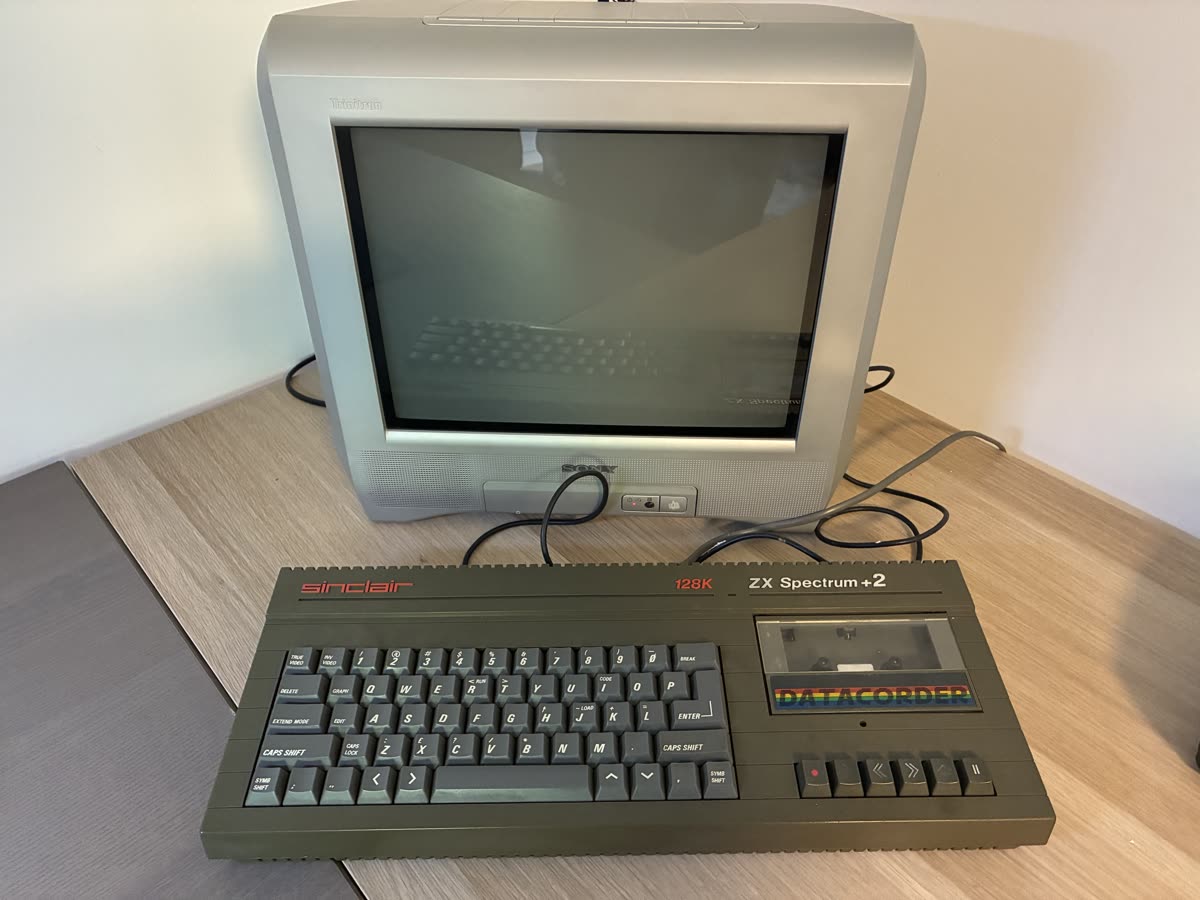
Can I avoid opening it?
My first thought was to skip the repair altogether: if the deck won't play, just feed the loading audio in from something else, like a phone or a laptop. That's what the EAR socket is for on a lot of 8-bit machines, and it's the usual way around a dead tape deck.
With the grey +2 I am out of luck though. The only audio socket on the back says "Sound", and it's an output. It sends audio out, it can't take a loading signal in. The built-in Datacorder was meant to be the only way in. You can add an EAR socket to the grey +2, but that means opening the case and soldering, which is exactly what I was trying to avoid. And if I was opening the case anyway, I might as well fix the deck properly.
Narrowing it down without tools
Before grabbing a screwdriver, I tried a few things that cost nothing.
- What works and what doesn't? Fast-forward and rewind were fine, only play failed. So the motor was OK and the problem was specific to play. Play is the hard job: the deck has to pull the tape past the head at a steady speed and keep the take-up reel winding at the same time.
- The finger test. I tried to stop the spinning flywheel with my finger. It fought back, and spun right up again as soon as I let go. So the motor and the main drive had plenty of power.
- The pause trick. With a tape in and play pressed, I hit pause and then released it. The deck came back to life, played for a moment and stopped again. Every single time. A dead motor wouldn't come back like that. What I was seeing was the auto-stop doing its job: it cuts the motor when it thinks the take-up reel has stopped turning. So the take-up was stalling, and the auto-stop was (correctly) shutting everything down.
So: motor fine, main drive fine, problem somewhere on the take-up side.
Opening it up
Six screws on the bottom, then lift the top off carefully. The +2's keyboard ribbon cables are famously fragile, so unplug them before you pull the two halves apart.
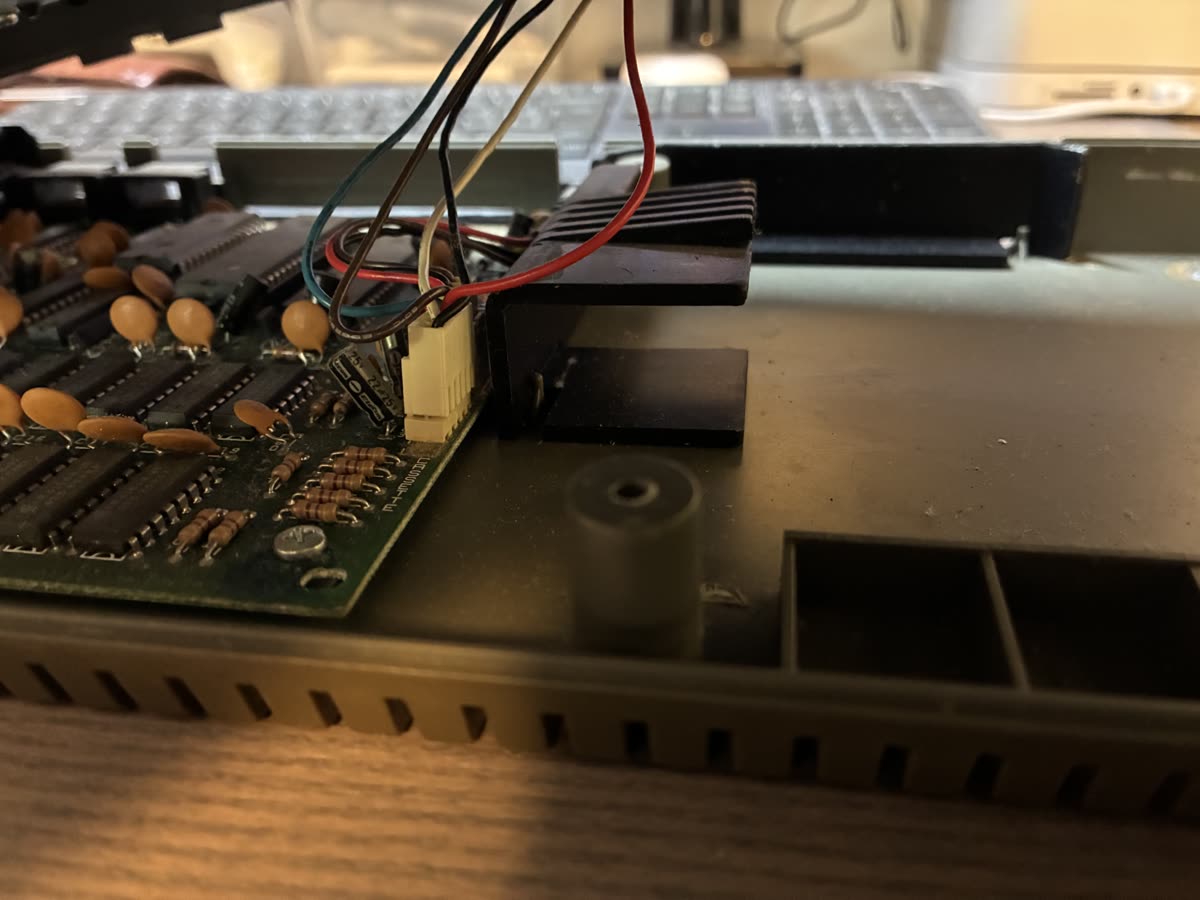
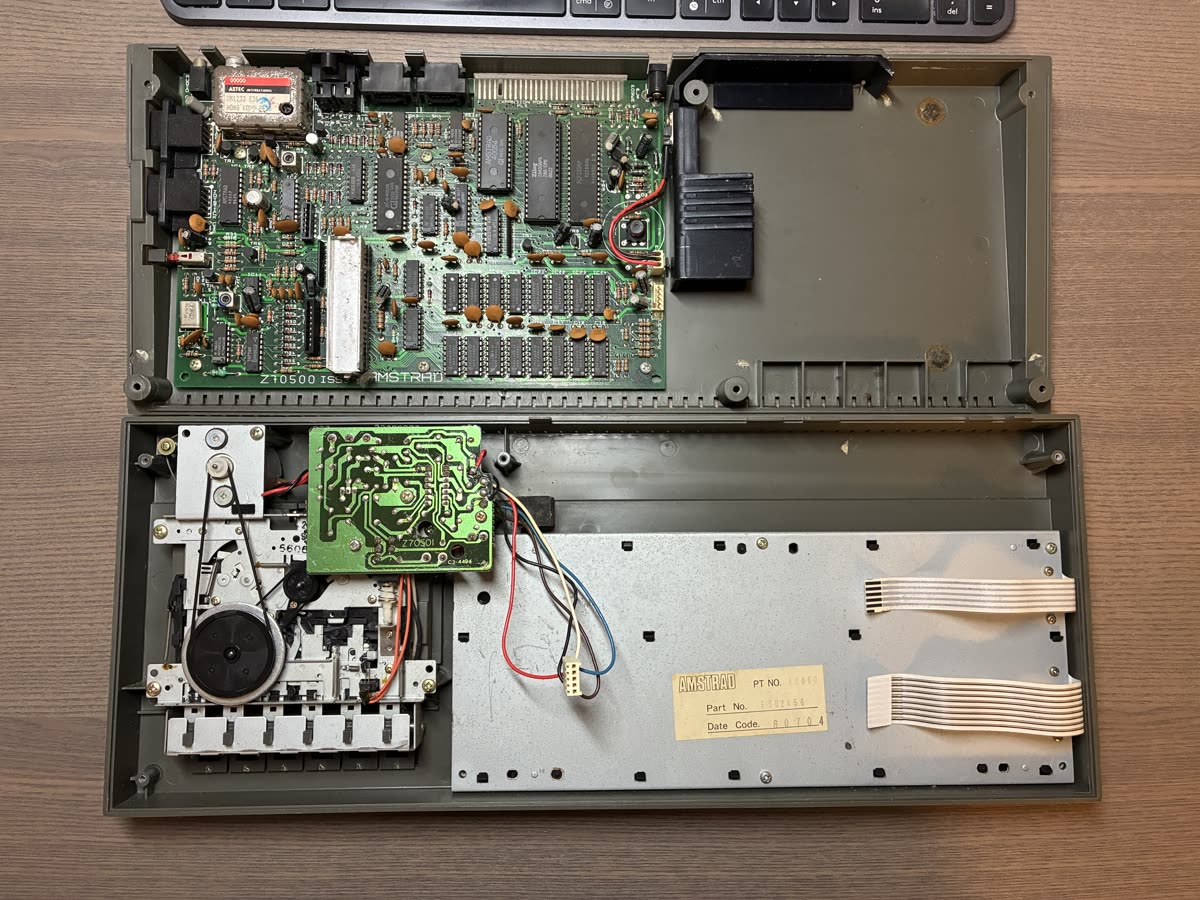
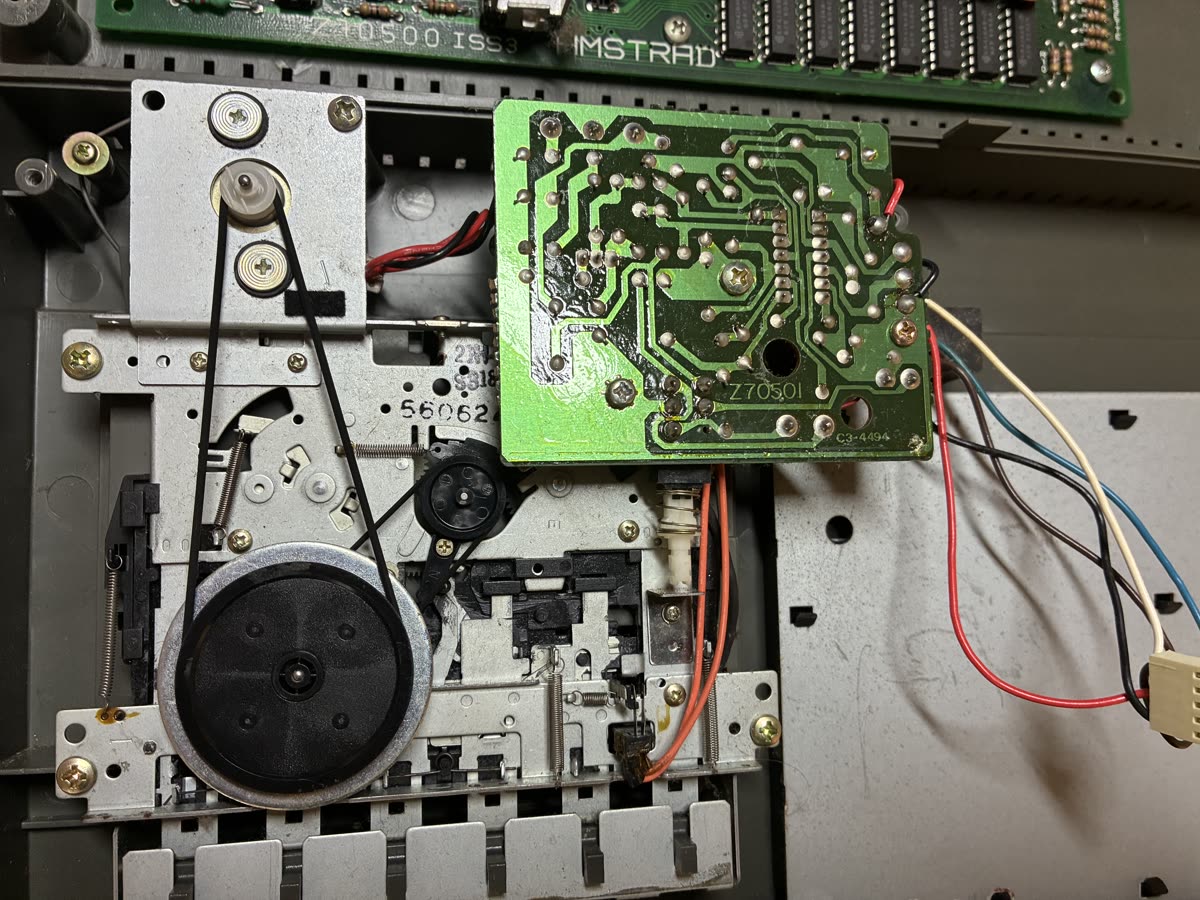
Inside, the Datacorder is its own little self-contained deck: a big flywheel with the drive belt around it, and a small wheel on a pivoting arm (the idler) that swings over to drive the take-up reel when you press play.
The cleaning attempt (that didn't work)
Old rubber goes shiny and loses its grip, so I started with the cheapest fix there is: cleaning. I cleaned the rubber edge of the idler wheel with isopropyl alcohol until it looked matte, and moved the pivot arm back and forth a few dozen times to loosen up any old, hardened grease. I also cleaned the pinch roller, which was filthy. It took something like twenty cotton buds before they stopped coming out black. (A tip I picked up along the way: rub it with a dry fingertip to tell dirt from perished rubber. Mine came up clean and the rubber was still firm, so the roller was fine.)
Test cassette in, press play... and it turned a little, less than 45 degrees, and stopped. All that cleaning for nothing. A bit of a letdown, but at least I knew it wasn't dirt. Something was worn.
The real culprit: a loose belt
In the end it was almost embarrassingly simple: the big drive belt felt loose.
I'd ruled the belt out early, because fast-forward and rewind worked fine. If the belt was bad, surely those would fail too? Turns out that logic doesn't hold up. Fast winding is an easy job. Play is a heavy one that never lets up: the belt has to keep the flywheel driving the capstan while the tape is dragged past the head the whole time. A stretched, tired belt can handle the easy job and slip on the hard one. And since the take-up is driven off the same flywheel, a slipping belt starves it. The take-up barely moves, the auto-stop sees a stalled reel and cuts out. Exactly what I was seeing. And a 40-year-old belt that's gone slack is apparently the classic +2 loading fault.
There's no tightening a stretched rubber belt, so it had to be replaced.
Finding a belt
Honestly, this was the painful part, way harder than the repair. I'm in Luxembourg, so inside the EU, and getting hold of a £3 belt turned into a quest:
- One EU shop didn't have it.
- The best-known UK specialist had it, but since Brexit they only ship within the UK.
- Another UK shop had closed down.
- A good UK retailer would ship to me... for £34 of DHL Express, on a £3.49 belt that weighs a few grams.
What finally worked was eBay. A seller listed the belt set with eBay's Global Shipping Programme, so international tracking and customs were sorted up front (no surprise fee at the door), and the total came back down to something sane. If you're in the EU hunting for small retro parts, skip the specialist shops' own websites and look for their eBay listings instead. That's where the international shipping actually works.
The fix
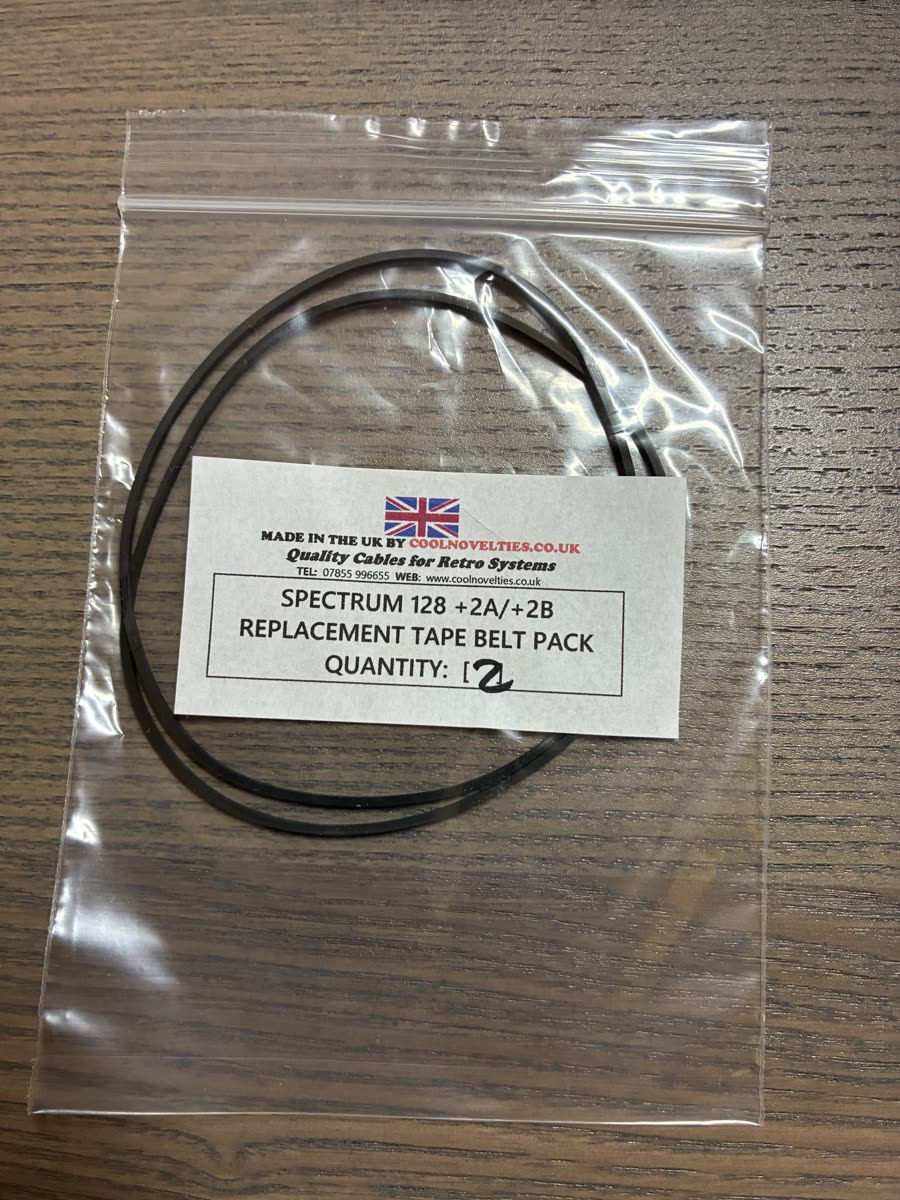
When the belt arrived, I slipped the new long belt over the flywheel and the motor pulley (the easy one, no threading needed), closed it up and pressed play.
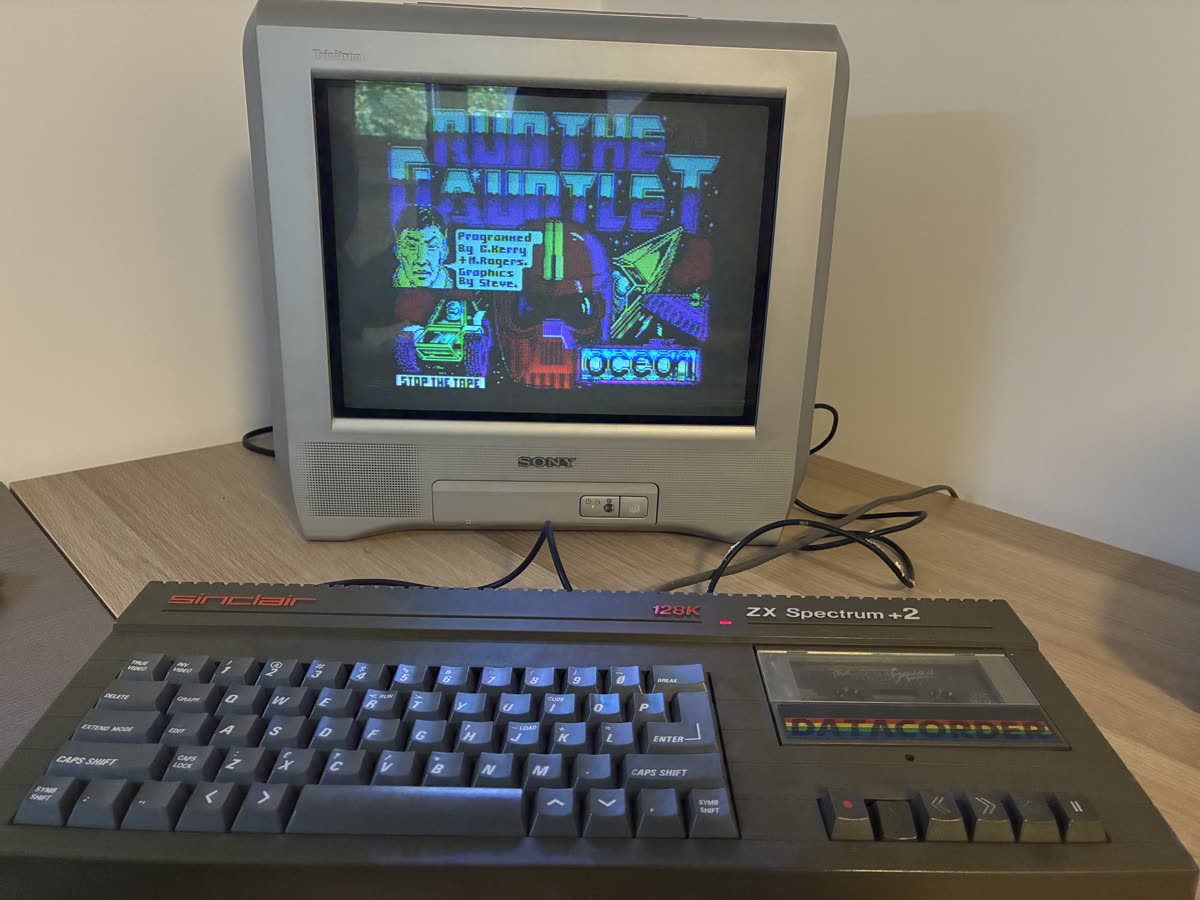
It played! The take-up turned smoothly and kept on turning. After all that, one new belt was the whole fix.
Takeaways
- Diagnose before you buy anything. The free tests (what works, the finger test, the pause trick) pointed me to the take-up and the auto-stop before I'd spent a penny or touched a screw.
- Clean it anyway. It didn't fix mine, but it's free, it ruled out dirt, and the deck is happier for it.
- On a +2 that won't play, suspect the main belt first. Don't overthink it like I did.
- Buying small parts in the EU since Brexit is a puzzle of its own. eBay's international shipping is often the easiest way through.
One +2, happily loading from its own deck again. Worth all the back-and-forth.